To reduce manual entry of estimated cost lines, you can create templates. A template is a reusable set of item charges with default cost calculation methods and rates. There are sales templates, used on sales agreements, and purchase templates, used on purchase agreements.
A template is matched to an agreement on the following criteria:
|
Sales template |
Purchase template |
|---|---|
|
Customer No. (the agreement's sell-to customer) |
Vendor No. (the agreement's buy-from vendor) |
|
Ship-to Code |
|
|
Country/Region Code (the agreement's ship-to country/region) |
Country/Region Code (the agreement's buy-from country/region) |
|
Shipment Method Code |
Shipment Method Code |
|
Shipping Facility Code |
Shipping Facility Code |
Set Up
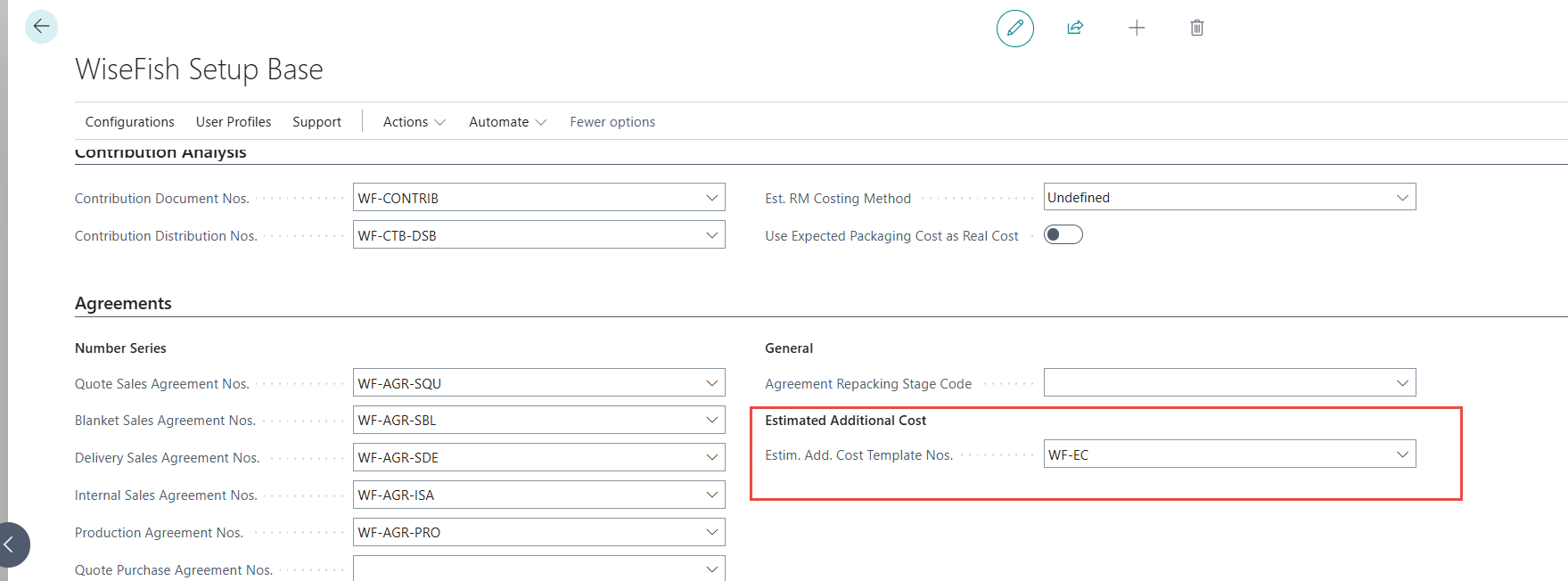
Before creating templates, define a number series for them:
-
Go to WiseFish Setup Base.
-
Fill in Estim. Add. Cost Template Nos.
Create a template from an agreement
Once a number series is defined, the easiest way to set up a new template is to use the information already entered in a Delivery or Receipt Agreement:
-
Fill in the Delivery or Receipt Agreement with the criteria above. You don't need to use all fields.
-
Go to the Estimated Additional Cost page and enter the item charges and costs.
-
Choose Save to Item Charges Template.
The criteria from the agreement and the cost lines are saved as a new template.

Create or edit a template directly
On the Item Charges page, choose Estimated Cost > Estimated Cost Templates, or search for Estimated Additional Cost Template List. Open a template, or create a new one:
-
Code: assigned from the number series. If Estimated Cost Type isn't set yet, you're asked whether the template is for sales or purchase.
-
Customer No., Ship-to Code or Vendor No.: when you choose one, Country/Region Code and Shipment Method Code are filled in from the customer, ship-to address or vendor. If you clear the field, the values you already have are kept.
-
Use Agreement Currency as Default: when this is on, lines without a currency use the agreement's currency when the template is applied. When it is off, lines without a currency use the local currency.
On the template lines, choose the item charge. You can choose item charges whose Estimated Cost Type matches the template, or is Both. Then fill in:
-
Vendor No.: the vendor expected to invoice the cost, for example the freight carrier. It is used when the estimated cost is realized in a purchase document. When Use Agreement Currency as Default is off, choosing a vendor also fills in the line's currency from the vendor.
-
Default Cost Calc. Method and the matching default rate, for example Default Percent of Value or Default Unit Cost per BWU.
-
Default Estim. Cost Currency Code: the currency of the default amounts on the line.
Viewing and Updating Templates
To see the templates that match your current agreement, choose Select Item Charges Template. The list is filtered automatically by the Delivery or Receipt Agreement you are working on.


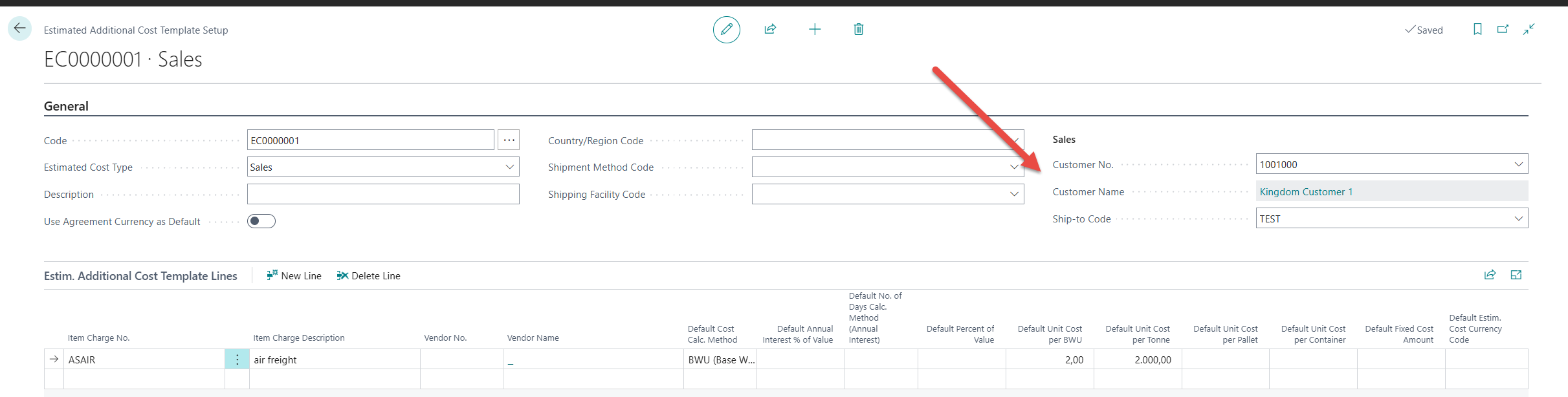
To view all templates, for both sales and purchase, and update costs when they change, choose Estimated Cost > Estimated Cost Templates on the Item Charges page, or search for Estimated Additional Cost Template List.

Apply a template to the cost lines
Once templates are set up, you can apply them in two ways when you open the Estimated Additional Cost page from an agreement:
-
Get Item Charges Template: retrieves the matching template and fills in the lines automatically.
-
Select Item Charges Template: if several templates match, shows a list so you can choose the right one.

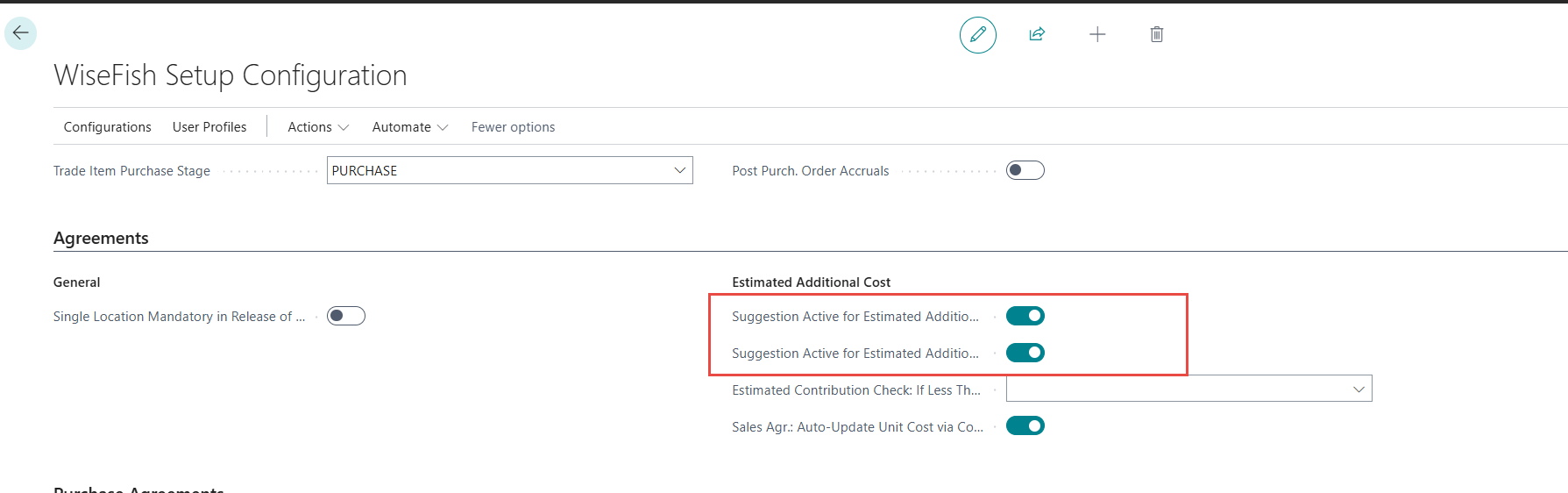
💡 You can also let the system apply a matching template automatically. To turn this on:
-
Go to WiseFish Setup Configuration.
-
Turn on Apply Estimated Additional Cost Template (Delivery Agr.) and/or Apply Estimated Additional Cost Template (Receipt Agr.).
When this is on, the system tries to apply a matching template when you open the Estimated Additional Cost page of an agreement that has no cost lines yet, and when the agreement is released.